

Careers in the Music Industry Songwriter / Composer
What is a Songwriter / Composer?
Also known as: Lyricist, Topliner, Music Creator, Songsmith, Composer-Producer
If you’re exploring what it means to build a career as a composer or songwriter, this guide breaks down everything you need to know – and how this creative role fits into wider careers in the music industry.
In this blog post, we’ll explain what composers and songwriters do, the skills they need, who they work with, and how this career path works in the real world.
You’ll also learn what the role looks like day-to-day, how professionals earn money, and how to get started – whether you want to write for artists, film, TV, theatre, or your own creative projects.

Contents
- What Does a Composer or Songwriter Do?
- What Makes a Career as a Songwriter or Composer Unique?
- What Are The Typical Composer and Songwriter Responsibilities?
- What Skills Do I Need to Succeed as a Composer or Songwriter?
- Who Will I Work With as a Songwriter or Composer?
- Where Do Songwriters and Composers Work?
- What is The Career Progression of a Composer or Songwriter?
- What is it Like Day-to-Day as a Composer or Songwriter?
- How Can I Become a Songwriter or Composer?
- How WaterBear Can Help You Become a Songwriter or Composer
What Does a Composer or Songwriter Do?
Composers and songwriters are the creative force behind much of the music we hear every day, from chart-topping hits to evocative film scores.
At their core, they shape raw musical ideas into structured works that evoke emotion, tell stories, or enhance the atmosphere of a scene or brand. From catchy pop hooks to sweeping orchestral scores, they turn imagination into sound.
Though there’s some overlap, songwriters usually focus on lyrics and melodies and may work independently or as part of a team crafting songs for other artists. Composers, on the other hand, are more likely to write instrumental music and are commonly found in spaces like film, theatre, gaming, and classical performance. Both may work solo or as collaborators, contributing to projects in advertising, sync licensing, live performance, or media.
Though they often work behind the scenes, their role is central to the music and entertainment industries and is a key part of careers in the music industry. Every track, score, or jingle starts with someone shaping an idea, whether jotting notes on paper or laying down demos in a DAW, and whether writing for themselves or others, composers and songwriters shape the musical landscape we all move through.
What Makes a career as a songwriter or composer unique?
As one of the most influential behind-the-scenes careers in the music industry, the songwriters or composers role is unique because…
Strategic Creativity
They blend creativity with commercial awareness, crafting music that’s expressive and purposeful.
Core Creators
They’re the starting point of the musical chain, crafting the songs, scores, and hooks that drive the industry.
Versatile Across Genres and Platforms
From pop charts to gaming soundtracks, they adapt their skills to suit diverse musical landscapes.
Emotion Through Sound
Their goal is to move people using melody, harmony, and rhythm to tell stories and evoke feeling.
Freelance Flexibility and Royalty Potential
Many work independently, with earnings that may grow over time through royalties and licensing.
“I would advise anyone starting as a songwriter today to get into the habit of writing as often as they possibly can, and to concentrate on developing the efficiency of their working practice. I’m talking about having an artistic and creative state of mind as often as they can, probably all the time.
We need to write a lot of songs because it’s impossible to just wake up in the morning and say, “today I’m going to write a good song”. A good song happens as much by serendipity as it does by design, so consequently the more you write, the more likely you’re going to turn out a great song.
Get used to writing, and completing the writing of a song, as often as you can and then eventually, you’ll have a collection of hopefully excellent songs, and then you can go out into the wider world and impress everybody with your fabulous work.” – Steve Hillier (Dubstar, WaterBear Tutor & Professional Songwriter)
What are the Typical Composer and Songwriter Responsibilities?
The responsibilities of a composer or songwriter can vary depending on their focus, whether they’re writing for sync, theatre, pop releases, or instrumental commissions. Many work independently or as part of a team, with some juggling creative tasks and essential admin like rights management and pitching.
Some songwriters may specialise in lyrics, melodies, or full arrangements. Others are more fluid, contributing across many areas and adapting their process to suit the project or collaborator.
Typical responsibilities include:
- Writing music and lyrics – Crafting original compositions, toplines, or instrumentals.
- Collaborating with others – Working with artists, producers, or clients to bring ideas to life or meet a creative brief.
- Recording demos – Producing clear recordings to showcase songs for pitching or further development.
- Revising work – Tweaking lyrics, structure, or arrangements based on feedback or new direction.
- Pitching songs – Submitting songs to artists, publishers, or clients for use in projects.
- Managing rights and registrations – Ensuring songs are properly credited and protected for royalty collection.
- Maintaining a song portfolio – Organising and updating your body of work for easy pitching and reuse.
- Meeting creative or commercial briefs – Writing to deadlines for sync, media, or commissioned projects.
- Networking and staying current – Keeping up with trends, collaborators, and opportunities in the music world.
What skills do I need to succeed as a Composer or Songwriter?
Composers and songwriters draw on a unique blend of musical expertise, technical ability, and personal qualities. These skills help them bring ideas to life, collaborate effectively, and sustain their careers over time. Some are honed through training, while others develop naturally through practice, feedback, and persistence.
Here are some of the key skills composers and songwriters typically need:
- Musical knowledge
- Lyric writing and composition
- Technical and industry knowledge
- Creative empathy and collaboration
- Self-discipline

Who will I work with as a Songwriter or composer?
Songwriting and composing are deeply collaborative roles.
Your collaborators will depend on your specialism (whether you’re writing pop hits, composing for film, or working in theatre) but the ability to connect with others and adapt to different working styles is key across all areas.
You might begin by co-writing with other musicians, producing demos yourself, or working with peers to pitch songs to artists.
As your career develops, your network can grow to include producers, A&R reps, and publishers who help get your work recorded, released and pitched.
Composers working in media often collaborate closely with directors, editors, and music supervisors to score scenes effectively. In both fields, developing strong relationships with clients, performers, and creative teams helps turn ideas into finished pieces – and often leads to future work.
Typical collaborators include:
- Artists and performers (for co-writing or placements)
- Music producers and engineers
- Media creatives (including music supervisors, editors, directors, and sync/licensing agents who shape music in film, TV, and advertising)
- A&R and music publishers
- Other songwriters, instrumentalists, and arrangers
“I think ultimately you need to be friends with the person that you’re working with. I don’t mean just friendly. I think there’s a connection that goes beyond being able to get on. it’s about having fun. it’s about having common references, but not exactly the same references because there wouldn’t be a lot of point in working with that person – diversity kind of helps in that way.” – Steve Hillier (Dubstar, WaterBear tutor & professional songwriter)
Where Do Songwriters and Composers Work?
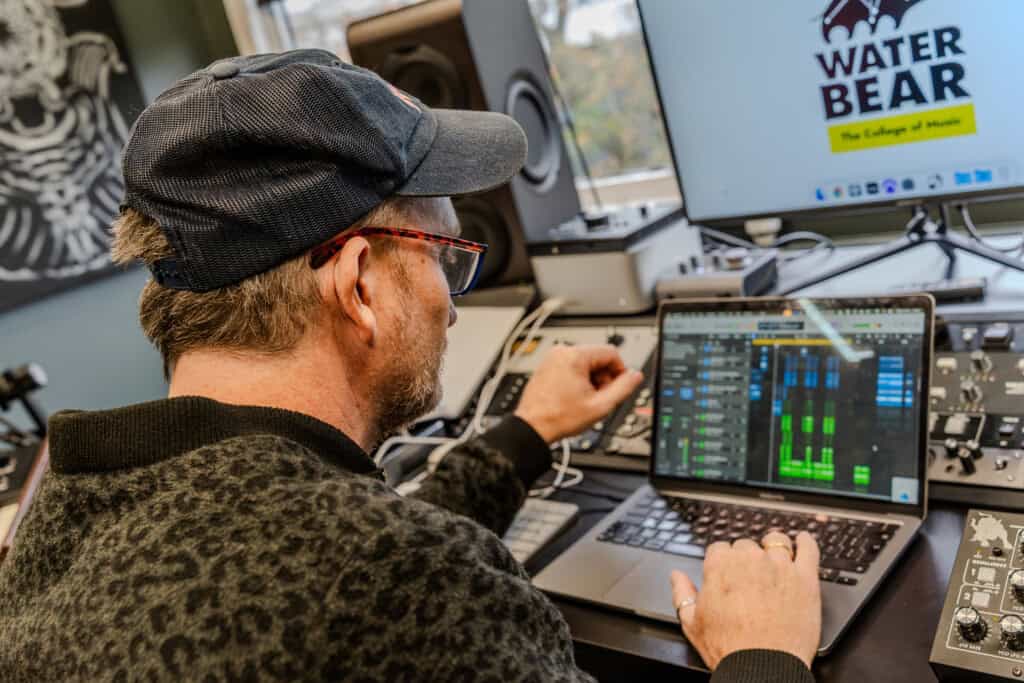
Songwriters and composers work wherever music is made, and for many, that starts at home. A home studio can be the launchpad for writing, recording, and collaborating remotely with clients or artists around the world.
As careers develop, they might also work in professional studios, rehearsal spaces, theatres, production houses, or on set for film and TV projects.
Most work freelance, building careers through a mix of commissions, sync placements, publishing deals, and collaborations. Others may be signed to publishers, work for media companies, or join dedicated writing and production teams.
“In my career I’ve had multiple publishers. At the moment I have two active publishers, and I have spent my entire career working self-employed, or what you might describe as freelance.” – Steve Hiller (Dubstar, WaterBear Tutor & Professional Songwriter)
While some roles offer more structure, many professionals thrive by staying self-directed, adaptable, and well-connected. Opportunities often come through personal networks, industry contacts, and publishing companies.
“Pretty much everything a professional writer will write will be either written to a brief, or it will be from what we call a call sheet, which is basically a spreadsheet that your publisher would provide, and it lists who is looking for songs. To give an example, “Sophie Ellis-Bextor is looking for songs, what have you got?”, and then as a writer, you would need to work out what it is that Sophie requires, and then you write it, and send it off to her people, or your publisher, and then hopefully she hears it and likes it.” – Steve Hillier (Dubstar, WaterBear Tutor & Professional Songwriter)
What is the Career Progression of a Composer or Songwriter?
There’s no single route to success as a composer or songwriter; every career looks different.
Many start by writing solo or co-writing with peers, building a catalogue of songs while exploring placements with artists, sync libraries, or online platforms.
Early breakthroughs might come from a sync deal, a song placement, or a collaboration that gains traction. Over time, writers may sign with publishers, secure representation, or specialise in areas like film scoring, sync, or ghost-writing.
Some go on to lead writing sessions, launch their own publishing ventures, or work with major artists and media clients. Others use their skills to move into areas like A&R, production, artist development, or music education.
Whether you grow steadily or catch a big break, long-term success often comes from adaptability, consistent output, strong relationships, and a willingness to learn and evolve with the industry.
What is it like Day-to-Day as a Composer or Songwriter?
There’s no typical routine for composers and songwriters. Some days are spent writing solo, others in co-writing sessions or collaborating with producers and artists.
Work often shifts between creative flow and responding to structured briefs or feedback. There’s also the admin: registering songs, pitching to publishers, and managing contracts.
Steve Hiller (Dubstar, WaterBear Tutor & Professional Songwriter):
“A typical working day for me now starts around half five in the morning – there’s nothing going on around you, no one’s going to be calling you, no one’s going to be knocking at your door, or anything like that. Also, this is the moment where my ears and my imagination are working the best.
If it’s a music day, I will come up into my studio and I will start writing. I will be working on stuff for a couple of hours and then I will take a break, and I probably won’t return to music until after lunch. I would start again probably around one o ‘clock and I will work on until about five or six o ‘clock.
Do I keep strict working hours? It’s not strict, it’s more of a well-defined working habit. I find that having done this for so long it’s easy to get into inefficient working practices, what I do is stick to the habits that I know get most done. By starting early and finishing relatively early, I don’t wear myself out, particularly my ability to hear, which most people will find that after a few hours of listening to music, their ability to be objective goes. By having two medium-sized bursts of music per day, that’s probably about the maximum that I can continue working with music before I get tired of it.”
How can I Become a Songwriter or Composer?
There’s no one-set path into songwriting or composing.
Many start simply by writing, experimenting, and sharing their work. Consistency is key. Write regularly, record demos, and build a portfolio of songs you can share and refine.
Studying music can fast-track your growth. Courses focused on songwriting and production sharpen your skills, introduce industry tools, and connect you with collaborators and mentors.
Outside the classroom, getting involved in writing groups, sync collectives, and open mic nights can help hone your craft and build your network. Interning with publishers, studios, or media companies can offer hands-on insight into the industry.
At WaterBear, our courses are designed to reflect the real music world. We focus on developing your creative voice, building your professional toolkit, and helping you connect with the wider network you’ll need to thrive.

How WaterBear Can Help You Become a Songwriter or Composer
At WaterBear, we’re dedicated to supporting your journey as a songwriter or composer with flexible, career-focused degree courses tailored to your goals.
Our BA (Hons) Professional Music (Songwriting) course is available on-site in Brighton and Sheffield, immersing you in a vibrant creative community while honing your craft.
For those who prefer online study, our BA (Hons) Songwriting & Music Performance course offers the same high-quality experience.
If you’re looking to deepen your expertise or build on your professional experience, our MA Songwriting course is offered both on-site and online, perfect for graduates and industry professionals aiming to advance their practice.
Beyond the classroom, you’ll benefit from one-to-one mentoring with industry experts, tailored career advice, and access to exclusive masterclasses, networking events, work experience, and performance opportunities.
Ready to take your songwriting or composing career to the next level? Explore our courses, book an open day, or download our prospectus today.
The career information provided in these WaterBear articles is intended as general guidance on roles within the music industry and does not constitute specific professional or careers advice. For individual support, students are advised to contact the WaterBear Music Industries team, who can offer personalised career guidance, mentoring, and artist development through our degree programmes.
Related Careers
Explore other careers in the music industry:
- Music Supervisor
- Sound Designer
WaterBear – The College of Music
WaterBear offers BA (Hons) degree and master’s courses made for today’s musicians, artists, and industry professionals. Its colleges are based in the heart of Brighton and Sheffield, two amazing UK cities with incredible musical roots and heritage. The college also has a range of online distance learning courses.
WaterBear is a College of Falmouth University, a pioneer in creative industries education, entrepreneurship and innovation. Run by musicians for musicians WaterBear is about smaller class sizes, flexible course delivery, bespoke one-to-one mentoring and exclusive work experience and career development opportunities.